Insurance lead generation: build your own lead flow
Bought leads stop the day the budget does. This guide shows how an insurance agency or brokerage builds its own leads through search, paid ads and fast follow up, and where we can help.
On this page
Why agencies build their own insurance leads
Insurance lead generation is every way your agency or brokerage gets people who want a quote to ask for one. You can buy those people from a vendor, or you can build channels that bring them to you: your website in search, paid ads on buyer searches and follow up that runs on its own.
A page that ranks for a line you write brings requests again next month. Each of those people asked for your agency alone.
Every client you win tends to stay. Agencies ranked best in the 2025 Big I and Reagan Consulting Best Practices Study retained 96.5 percent of their revenue on average. Average agency retention sits near 84 percent, according to the Liberty Mutual Independent Agency Growth Study for 2026.
Most agencies are small. Of the 120,434 insurance agencies and brokerages in the US, across all lines, about three in four have fewer than five people, according to US Census Bureau business statistics for 2022. With a team that size, producers sell and insurance agency marketing gets whatever hours are left.
Bought leads vs your own leads
Bought leads arrive fast, and your own channels give you control over cost and quality. For insurance lead generation, many agencies use both for a while: bought leads fill the calendar while search and ads are built, then the budget moves to whichever channel costs less per bound policy.
| Compare | Bought leads | Your own leads |
|---|---|---|
| What you pay | A price for every lead, paid again for the next one | Ad clicks and content work. Search visits cost nothing per click |
| Who else gets it | Shared leads go to several agents at once | The person asked for your agency only |
| Who decides | The vendor picks the source, the volume and the quality | You pick the lines, the states and the searches |
| How fast | Leads arrive the day you pay | Ads bring requests this month, search builds over months |
| When you stop paying | Leads stop the same day | Pages that rank keep bringing requests |
Bought leads still make sense in three cases. A new agency with no search traffic yet, a new line you want to test before you build pages for it, and the months while your own search pages start to rank. In each case, set an end date for the vendor before you start.
Shared, exclusive, aged and live transfer leads
If you buy insurance leads, know which kind you are paying for. Vendors sell four types of personal and commercial insurance leads, and each type sets how fast you must call and how many agents you race.
Four types of bought leads
-
Shared leads
One request sold to several agents at once, so it becomes a race to call first.
-
Exclusive leads
Sold to you alone, so no other agent calls the same person.
-
Aged leads
Older requests sold again, often weeks after the person first asked.
-
Live transfer
A vendor screens the caller and connects them to your phone while they are on the line.
Ask any vendor four questions before you sign. Several vendors publish no rate card. The answers are your price list.
- Is this lead sold to anyone else, and to how many agents?
- How old is the request by the time it reaches me?
- Can I filter by line, state and business size?
- What happens to a lead with a wrong number or no interest?
A lead that waits loses interest, whatever its type, so your follow up matters as much as the source.
How to get insurance leads: what to set up first
Five things decide whether insurance agency lead generation turns into policies, and none of them cost ad money.
- Pick the lines you want more of, such as contractors, commercial auto or small business packages.
- Give each line its own page with one clear action: request a quote or book a call.
- Send every form, call and chat into one CRM, tagged with where it came from.
- Count each request as a conversion, so you can see which channel brought it.
- Decide who calls back, how fast, and what happens when nobody picks up.
Skip these and every channel looks worse than it is. Requests from search, ads and vendors land in different inboxes, nobody can say which one bound the policy, and the budget follows guesswork.
Tracking comes before spend. Read how to set up conversion tracking so every call and form counts from the first day.
SEO for insurance agents: leads that keep coming
Insurance agency SEO puts your pages in front of people who search for the cover you write, in the places you are licensed. Those requests come to you alone, and a page keeps working once it ranks.
Start with the pages a buyer lands on. Build one page for each line and one for each area you serve, each saying what the cover includes, who it suits and how to get a quote. A contractor who searches for general liability in your county should land on your general liability page for contractors.
Write each area page for the owners who live there. Name the industries nearby, the questions local owners ask and the carriers you place with in that state. A page that only swaps the city name gives a buyer no reason to call.
Then fill in your Google Business Profile and ask every new client for a review. Keep your agency name, address and phone the same everywhere they appear, so every listing points to one agency.
Add articles that answer what buyers ask before they call, such as what a certificate of insurance is or which cover a new trucking company needs. Expect three to six months before search brings steady inquiries. Your first new pages can be live within weeks.
First pages to build
- Line pages One for each line you write
- Area pages One for each county or city you serve
- Business profile A review from every new client
- Answer articles The questions buyers ask before they call
Top of page bid, US
- business insurance $28.00 to $95.71
- commercial insurance quotes $21.78 to $77.41
- business insurance agent $19.98 to $74.80
- commercial insurance $10.28 to $71.62
Google Keyword Planner, October 2026
Paid ads for insurance agencies: leads this month
Paid search shows your agency to buyers this week, and the search you pick sets the price of every click. Broad buyer searches cost the most. Google Ads top of page bids in the US ran $28.00 to $95.71 for “business insurance” and $10.28 to $71.62 for “commercial insurance”, per Google Keyword Planner in October 2026.
Google Ads for insurance agents works best narrow: one line, the areas you are licensed in, and searches that show the person wants a quote. A search for a line plus your city tells you more about the buyer than a search for insurance alone.
Before launch, set three things.
- Negative keywords for searches you never want to pay for, such as jobs, careers, training and lines you do not write.
- Location set to your states with the Presence option, so the ad reaches people who are in them.
- Each ad pointing at the page for its line, with calls and forms counted as conversions.
Add a call button to every ad. Call assets cost nothing to add. Set a minimum call length and short wrong number calls stay out of the count.
Check your state's advertising rules and Google's ad policies before the first ad runs. The full setup is in how to advertise on Google Ads, step by step.
Rather have the pages and ads built and run for you? Book a call.
Speed to lead: automate follow up so no lead waits
Speed to lead is the time between a quote request and your first reply. A request that waits for a free producer goes cold, so that first reply should go out on its own. Automation handles the steps that need no licensed person, and hands the conversation to one when it does.

-
Instant reply
A text and an email confirm the request within a minute and offer a time to talk.
-
Routing
The request lands in your CRM with its line and source, assigned to one producer.
-
Reminder
If nobody calls within the hour, the producer and a manager get an alert.
-
Follow up
An unanswered quote gets planned calls, texts and emails over the next two weeks.
-
Renewal
Every bound policy gets renewal reminders and a check for other lines the client needs.
Text only the people who agreed to it on your form. Put the consent line next to the phone field and keep a record of it in the CRM.
A first follow up system can be live in four to six weeks. It runs in the background, and your producers only see the requests that need a licensed person.
Turn clients and partners into a lead source
Your current book is a low cost lead source you already have. Every client you keep is business new leads do not have to replace, and every happy client knows other owners who need cover.
Ask when the client has just seen you at your best. The week a policy is bound or a claim is paid is the moment to ask for a review or an introduction.
Four sources inside your book
-
Ask at binding
Ask for a review and an introduction in the week a policy is bound.
-
Round out accounts
Find the lines each client buys elsewhere and quote them before renewal.
-
Partner referrals
Accountants, lenders and trade groups meet your buyers first. Agree on referrals both ways.
-
Local posts
Share answered questions and claim lessons where local owners already read.
Judge each channel by cost per bound policy
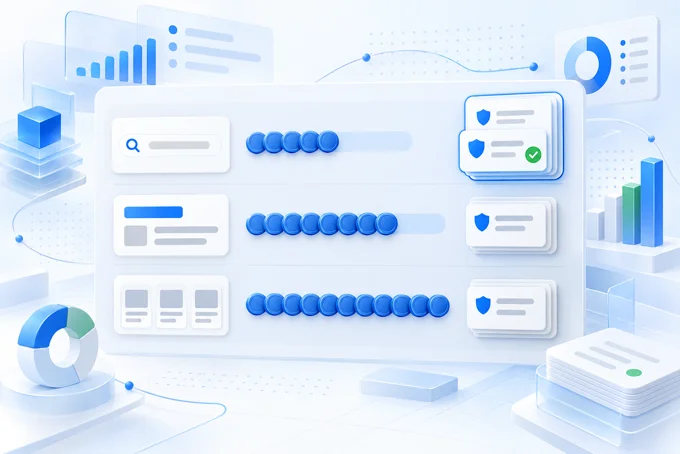
Cost per lead hides the difference between a cheap lead that never answers and a costly one that binds. Once a month, take what each channel cost and divide it by the policies it bound.
- Tag every request with its source: search, ads, referral or a vendor.
- Record the outcome in the CRM: contacted, quoted, bound or lost.
- Divide each channel's cost by its bound policies, then move budget to the lowest.
- Count what a client brings across every year they stay.
Send bound policies back to Google Ads as conversions. Bidding then learns from the searches that turned into clients.
How Aluxads helps an agency get its own leads
Aluxads builds the three insurance marketing channels that bring an agency or brokerage its own quote requests: search, paid ads and follow up. We start with research on the searches for your lines and states, set up tracking before any spend, and change the work every week from the numbers.
Where we would start depends on your agency. With little search traffic, paid ads and follow up come first while the pages are built. With a working site, SEO on the lines you want more of comes first.
Three channels, one team
-
Search pages that sell
Line and area pages, your business profile and articles, planned from what buyers search.
-
Ads that bring quotes
Campaigns on buyer searches in your states, with every call and form counted.
-
Instant follow up
Replies, routing and reminders built into your CRM, so no request waits.
Results from other industries, same method:
- 6.7× revenue for a B2B data company in SaaS and tech, from $300k to $2M ARR, while we ran its search, content and paid ads.
- 3× conversions from month one to month two for a services business whose ads had recorded zero conversions in four months.
- 194 systems live for a national services business that runs with one owner and no office staff.
Already running ads? A free Google Ads audit puts a monthly dollar figure on every leak in your account. Not showing up in search? A free SEO audit shows what holds your site back and which pages to build first.
For agencies and brokers
Get a steady flow of quote requests for your agency.
One free 30 minute call. You leave with the searches and pages to start on for your lines, with nothing to buy.
- What you get
- A free SEO audit with a ranked report and a page plan.
- How it is priced
- The audit is free. We quote after the first call.
- What you bring
- Your site address and Search Console access if you use it.
Prefer to write? Send us a message.
Insurance lead generation: questions agents ask
Is buying insurance leads worth it?
It can be, while you build your own channels. Buy exclusive leads in the lines you write, call within minutes and judge them by cost per bound policy.
How much do insurance leads cost?
Several vendors publish no rate card, so ask each one for a price for your line and lead type. For your own ads, US top of page bids for “commercial insurance” ran $10.28 to $71.62 in October 2026.
Can a small agency generate its own insurance leads?
Build one page for each line you write, fill in your Google Business Profile and run search ads on buyer searches in your states. Then reply to every request within minutes and ask each new client for a referral.
How long does SEO take for an insurance agency?
Three to six months is the usual wait before search brings steady inquiries. Paid ads fill the gap while your pages earn their rank.
Do we need a marketing team for this?
No. Your producers keep selling while a partner runs search, ads and follow up, and reports the numbers to you each month.