AI automation examples: eighteen systems for B2B companies
You hear that AI saves time, and nobody shows you where. Here are eighteen AI automation examples, each one a job your team can stop doing by hand.
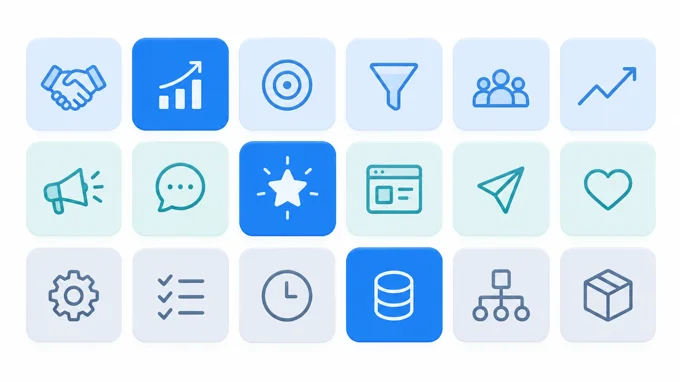
AI automation examples at a glance
AI automation is software that reads, writes, decides and answers inside your own tools. A repeated job finishes without someone doing it by hand.
The AI automation examples below are systems we build for B2B companies. Each entry names the job and what your team stops doing. Two from this list, review replies and listing posts, already run on their own for a national services business. See the proof on our AI development services page and in our business automation systems catalog.
Industry data shows where companies start. Sales and marketing content is the most common business use of AI (McKinsey 2025). Customer support is one of the most reported uses (McKinsey 2025).

AI automation examples for sales
Sales loses hours to sorting, looking up and typing. These six systems take that work.
- Lead scoring. Every inquiry scored on fit and intent, then routed before you read it. Nobody sorts the inbox by hand.
- Lead research. A prospect list filled in with company and contact details on its own. Nobody spends the morning looking up names.
- Speed to lead. A new lead answered at once, qualified, and booked. No lead waits until Monday.
- Outreach drafts. First touch and follow ups written from the prospect's own site. Your salespeople edit and send.
- Call notes to CRM. A sales call becomes fields, next steps and a follow up draft. Nobody types notes after the call.
- Proposal drafts. A first proposal or quote built from your template and the call notes. The blank page is gone.
AI automation examples for marketing
Marketing in a small company is whatever someone finds time for. These six systems keep it going every week.
- Content drafts. Pages and posts written from your data, in your voice. Your team edits.
- Review replies. Every review answered in your voice, ready to post. No review sits unanswered.
- Listing posts. Local listing and social posts published on their own. Nobody keeps a posting calendar.
- Campaign runner. A campaign planned, drafted and launched against a goal, with your sign off. You approve, the system does the rest.
- Competitor digest. What your competitors changed this week, on one page. Nobody checks their sites by hand.
- Claims check. Copy and ads checked against your voice and your legal lines before they ship. Mistakes get caught before a customer sees them.
Want to know which of these fit your company? Book the assessment call and get your three, ranked.
AI automation examples for operations and finance
Operations and finance run on answers, bills and numbers. These six systems deliver them without a queue.
- Support answering. Common questions answered from your docs, the rest routed to a person. Your team handles only the hard ones.
- One dashboard. Reviews, social, ads and sales data in one place. Nobody logs in to every tool.
- Bill coding. Vendor bills read, coded to the right account and routed for approval. Nobody keys in invoices.
- Spend watch. Card charges, expenses and duplicate invoices flagged before they are paid. The mistake is caught before the money leaves.
- Knowledge search. Ask what was quoted before and get the answer in seconds. Nobody digs through old mail.
- Numbers on demand. Type a question, get the chart or the number, no report queue. Nobody waits for a report.

How to pick your first three
Eighteen is a menu. Nobody orders the whole menu.
Payback picks the order. Put two numbers on each repeated job: the hours it takes every week and what those hours cost. The three jobs with the highest cost and the shortest build come first. The rest go on a roadmap.
Jobs whose output a person can check in seconds, like a coded bill or a review reply, pay back first.
An example at $150 an hour: a job that takes 20 hours a month costs $3,000 a month. One that takes 4 hours costs $600. The first goes higher on your list.
The free AI readiness assessment does this for you. One 30 minute call, a map of the work in about a week, then a walkthrough of your three systems.
You approve every output while it runs in draft, then you choose what goes live on its own. First system live in 4 to 6 weeks.
Your three systems
See which of these eighteen would pay back first for you.
A free 30 minute call. Nothing to buy and nothing to install.
- What you get
- A free AI readiness assessment with your three best AI systems ranked by payback.
- How it is priced
- The assessment is free. We quote after the first call.
- What you bring
- A list of the tools you use and read access to one or two.
Prefer to write? Send us a message.
Questions founders ask about AI automation
Do we need all eighteen systems?
No, most of the list will not pay back in your company this year. Three systems picked by payback come first, and the rest wait on a roadmap.
Are these just off the shelf tools with a new label?
No, each system is built inside your own tools, around your templates, your documents and your voice. A draft sounds like you and a reply matches what you would say.
What if our data is a mess?
You do not need to clean up before we start. The assessment works from a list of the tools you use and read access to one or two of them.
Will these systems replace people on my team?
They replace the repeated part of the job. Your team keeps the judgment, approves every output and gets the hours back for customers.