AI automation for small business: where to start
AI automation for small business starts with one question: where does your week go? Answer that first and the choice of tools gets easy.
On this page
AI automation for small business starts with your week
Most founders start with a tool. They buy a subscription, try it for a week and go back to doing the work by hand.
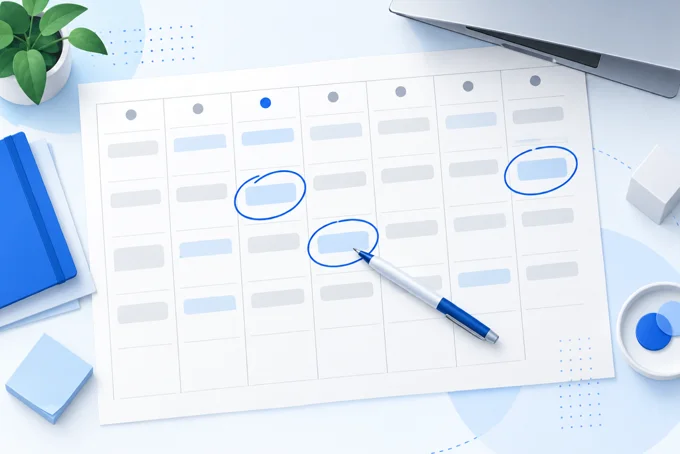
Start with the work. Look at one normal week and write down every job that comes back. The inbox gets sorted, the notes get typed, the bills get keyed in. The reviews wait for a reply.
Each of those is a candidate. The tool comes last, and by then the choice is small.
Map the repeated work and price it
Give every repeated job two numbers: the hours it takes each week and what those hours cost. A job that takes a senior person 5 hours a week costs more than one that takes an assistant 10 minutes.
Take review replies. If someone spends an hour every working day answering reviews, that is about 20 hours a month. At an example rate of $150 an hour, that one job costs $3,000 a month. Written down like that, you can compare it with every other job on the list.
Look in three places first.
- Where someone copies details from one tool into another.
- Where a customer waits for an answer your documents already hold.
- Where you write the same message every week.
To begin you need two things: a list of the tools you use and read access to one or two of them. You do not need to clean up your data first.
Pick three systems by payback
Rank the jobs by what they cost against how long the system takes to build. The top three get built. The rest go on a roadmap, in order.
Three is a working number. The first proves the approach, the next two show it holds. Your team gets time with each.
The pick differs by company. A sales heavy team gains most from leads answered fast. A company with a full inbox gains most from support answers. Our AI development services page lists every system we build.
Want someone to make the pick and build it? AI consulting for small business that ends in a working system.
Three examples
-
Speed to lead
Today leads wait until someone checks the inbox. Now each one is answered and booked at once.
-
Review replies
Today reviews wait until someone finds the time. Now a reply in your voice is ready for your yes.
-
Bill coding
Today someone keys in every vendor bill by hand. Now each bill arrives coded and ready for approval.
Want the map and the ranking done for you? Book the assessment call and see your three in about a week.
Build one system, approve it, then go live
Build the first system inside the tools you already use.
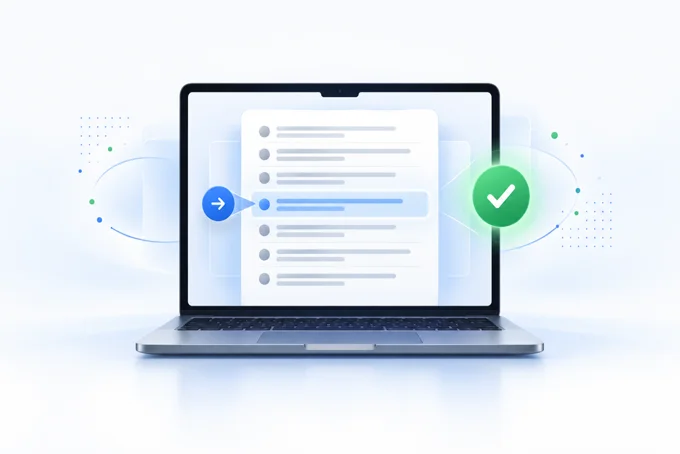
Before launch, the system works in draft. It prepares the reply, the post or the coded bill, and a person says yes or no.
The draft stage is where your team learns to trust the system. Each correction gets built in. The next draft needs fewer.
When the drafts are right, the system goes live. First system live in 4 to 6 weeks.
What to skip at the start
Skip the chatbot for its own sake. A chat window on your site solves nothing if nobody has a question it can answer.
Skip the big platform purchase. A system built around one job beats a platform that promises all of them.
Skip the data cleanup project. The first system shows which records matter, and those get fixed on the way.
Skip the second system until the first one runs. One finished system teaches your team more than three half built ones.
What comes after the first system
The first system gives you a number: the hours it returned in a month. That number decides what comes next.
If the hours came back, build system two from the roadmap. If they did not, narrow the job and fix it before anything new starts.
A services business we built for runs this way: every customer review answered in the owner's voice, every photo checked before it goes public.
The free AI readiness assessment covers the first three steps: the map, the prices and the ranking. One 30 minute call, about a week for the map, then a walkthrough.
Start here
See where AI would save your small business the most time.
A free 30 minute call. No subscription and no data cleanup before we start.
- What you get
- A free AI readiness assessment with your three best AI systems ranked by payback.
- How it is priced
- The assessment is free. We quote after the first call.
- What you bring
- A list of the tools you use and read access to one or two.
Prefer to write? Send us a message.
Questions founders ask before they start
Do we need a technical person on the team first?
No, your team approves every output. Nobody on your side writes code.
What if we pick the wrong job to automate?
The ranking guards against that. Every job gets its hours and its cost before anything is built, so the first system is the one with the clearest payback.
Is AI automation only worth it for bigger companies?
A small team feels every lost hour more. If one repeated job takes a person several hours a week, the math works for a small team.
How long until we see a result?
The assessment takes about a week from the first call to the walkthrough. If you go ahead, the first system is live 4 to 6 weeks later.