AI agents for small business
The same jobs come back every week, and nobody on a small team has time to test tools. AI agents for small business take one of those jobs and finish it, with your approval first.
On this page
What AI agents for small business do
An AI agent is software that finishes one job from start to end. Something sets it off: a new lead, a finished sales call, a customer question. The agent collects what it needs from your tools and documents, does the work and hands over the result.
Take a sales call. When it ends, the agent fills the CRM, the customer list your sales team works from, adds the next steps and drafts the follow up. Your salesperson reads it, changes a line and sends it. Nobody typed notes.
An agent follows the job your team described. It reads the sources you approved and stops where you told it to stop.
How an agent differs from the AI chat you already use
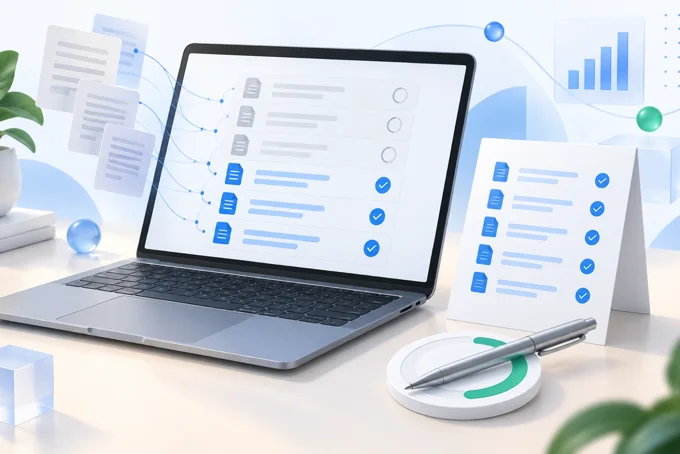
With a chat tool, you ask and it answers. Tomorrow the same job comes back. You ask again, paste the same background again and check the answer again.
An agent does not wait to be asked. The new lead or the new document starts the job, and the agent already knows the steps, the sources and the finish.
Proposals show the gap. In chat, you paste your call notes and ask for a draft every time. With an agent, the draft is waiting when the call ends, built from your template and your notes.
A chat tool helps with one request. An agent owns one repeated job. See the full range in our AI development services.
Which jobs to hand to an AI agent first
A good first job passes four checks.
- It comes back every week.
- It has a clear start and a clear finish.
- The information it needs already sits in your tools.
- A person can check the result in a minute.
Most first jobs are one of five kinds of work:
- Copying. Details move from a call or a document into your systems.
- Answering. Common customer questions get a reply from your own documents.
- Finding. Your team asks what was quoted before and gets the answer in seconds.
- Drafting. Proposals, outreach and posts start from your template and your voice.
- Checking. Copy and ads are checked against your voice and your legal lines before they ship.
If you cannot choose, start with drafting.
Rather have the first agent chosen and built for you? See our AI consulting services.
Three first jobs
-
Call notes to CRM
The agent types up the call. Your salesperson decides what the follow up says.
-
Support answering
The agent answers routine questions from your documents. Your team decides the hard ones.
-
Proposal drafts
The agent drafts the proposal from your template. You decide the terms and send it.
Not sure which job to hand over first? Book the assessment call and leave with a ranked list.
What AI agents look like inside a real company
One national services business has four agents at work.
- New team members are introduced online without anyone writing a word.
- Every customer review is answered in the owner's voice.
- Every photo is checked before it goes public.
- Listing posts are published on their own.
Each of these jobs used to take someone's hours every week. Each one now finishes without being asked.
The build is short. First system live in 4 to 6 weeks.
Where the agent stops and your team decides
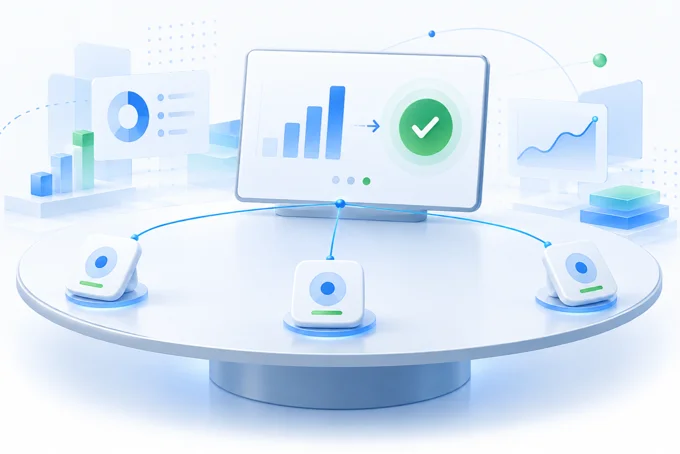
Your team writes the rules before the agent does anything. You choose the goal, the sources it may read and the point where it must stop.
You approve every output while an agent runs in draft. You choose when a reply, a post or a proposal goes live on its own.
When something falls outside the rules, the agent hands it over. A missing record, an unusual request and two documents that disagree all go to a person.
When an AI agent is the wrong fit
Some work stays with people. Hiring, sensitive negotiations and customer disputes depend on judgment and relationships.
A job that changes every time is a poor fit. So is a job that depends on records nobody trusts. Fix the records first.
If your team cannot say what done looks like, the job is not ready. Narrow it until the start and the finish each fit in one sentence.
The free AI readiness assessment finds the jobs that pass the test and ranks them by payback.
Your first agent
Find the first job worth handing to an AI agent.
One free 30 minute call. About a week later you see your jobs priced and ranked, with the first agent to build.
- What you get
- A free AI readiness assessment with your three best AI systems ranked by payback.
- How it is priced
- The assessment is free. We quote after the first call.
- What you bring
- A list of the tools you use and read access to one or two.
Prefer to write? Send us a message.
Questions founders ask about AI agents
Is an AI agent just a chatbot with a new name?
No, a chatbot answers when someone asks. An agent starts on its own when a job arrives and carries it to the finish, then waits for your approval.
Will an agent make decisions that should be mine?
It acts only inside the rules your team sets, and nothing goes live until a person says yes. Anything outside the rules goes to a person.
Is my company too small for AI agents?
Size matters less than repetition. If one job comes back every week and takes hours, it is worth a look, even with a team of five.
What if the agent gets something wrong?
The approval step catches it. Nothing reaches a customer until a person has said yes, and the agent hands over anything it cannot match to your rules.